
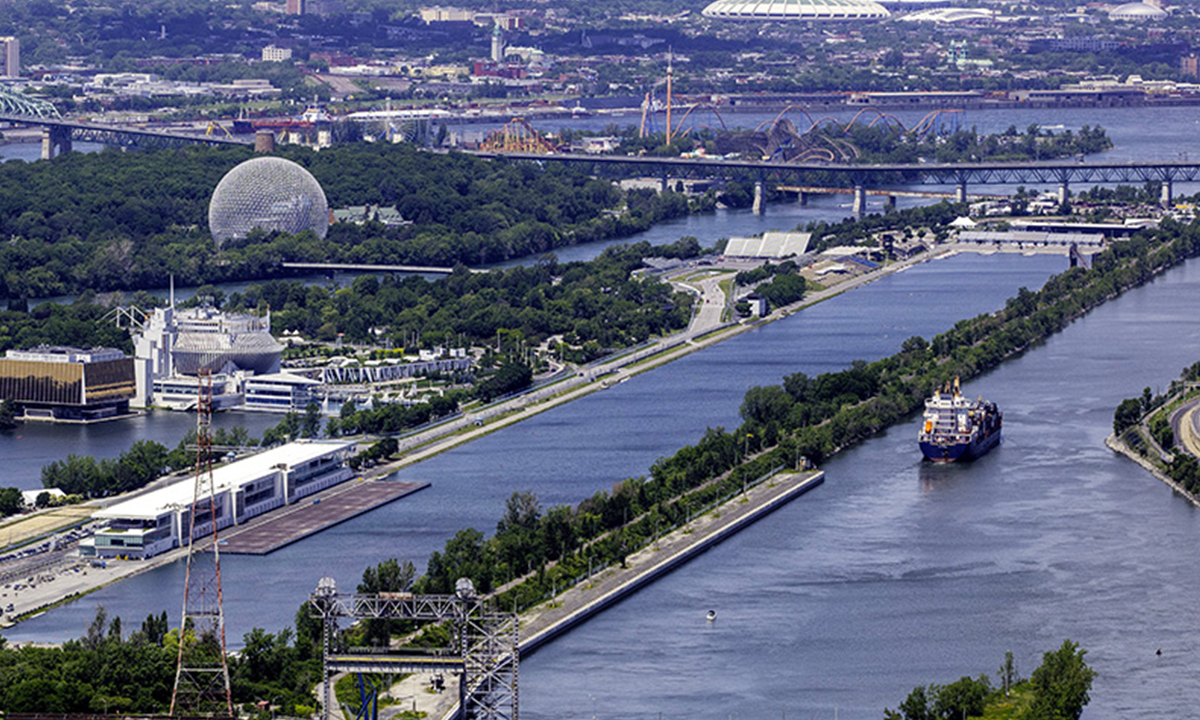
Specially designed for rowing and canoeing competitions at the 1976 Montréal Olympic Games, the Olympic basin in Parc Jean-Drapeau is one of the most iconic pieces of infrastructure in the city’s sporting legacy. Dug along the axis of Île Notre-Dame, an island created for Expo 67 and then remodeled for the Games, the basin was designed to meet the most demanding international standards: 2,180 m long, 110 m wide, eight marked lanes, and calm water protected from the wind, ideal for performance.
A theater for great performances
Its construction was a real engineering challenge: stabilizing the island’s backfilled soil, integrating the new infrastructure into the park, and coordinating the work with the upgrading of nearby Circuit Gilles-Villeneuve. The result, acclaimed since its creation, positions Montréal as a world leader in rowing sports.
During the Games, the Olympic basin hosted rowing and canoeing events, providing a spectacular backdrop for the athletes’ performances. Highlights included:
- impressive duels in men’s and women’s rowing, a discipline in which East and West faced off on the water
- ideal conditions: light winds and calm water, allowing for several exceptional performances
- a unique atmosphere at Parc Jean-Drapeau, balancing nature and architecture and giving the site a distinctly Montréal feel
Continuous transformation since 1976
After the Games, the Olympic pool never stood still. Today, it is one of the few competition venues from 1976 that is still fully operational.
An international training hub
The Olympic pool regularly hosts:
- national rowing and canoeing teams
- elite athletes preparing for the Olympics and Paralympics
- North American and European training camps
Its technical characteristics make it a favourite spot for elite athletes, particularly in the spring and fall.
An accessible, lively space open to the community
The Olympic Basin is also a vibrant space, deeply rooted in the daily lives of Montréalers and visitors alike. Over the years, it has hosted a series of major events, including:
- the World Rowing U23 Championships
- the Canoe Sprint World Cup
- international regattas
- North American university competitions
- the Canadian Rowing and Canoe-Kayak Championships
- Its proximity to Jean-Doré Beach, Circuit Gilles-Villeneuve, gardens, and trails makes the area a huge playground accessible to both elite athletes and amateur sports enthusiasts.
Today: A vibrant Olympic site
In 2026, as Montréal celebrates the 50th anniversary of the Games, the Olympic pool remains a place of excellence, gathering, and sporting pride. More than just a sports facility, it is the very example of a successful Olympic legacy: useful, relevant, sustainable, open to all, and rooted in the life of the city.
The Olympic pool at Parc Jean-Drapeau was one of the first in the world to be designed to reduce the effect of wind thanks to the artificial topography of Île Notre-Dame. As early as 1976, several foreign coaches described it as “one of the most perfect pools ever built.”