
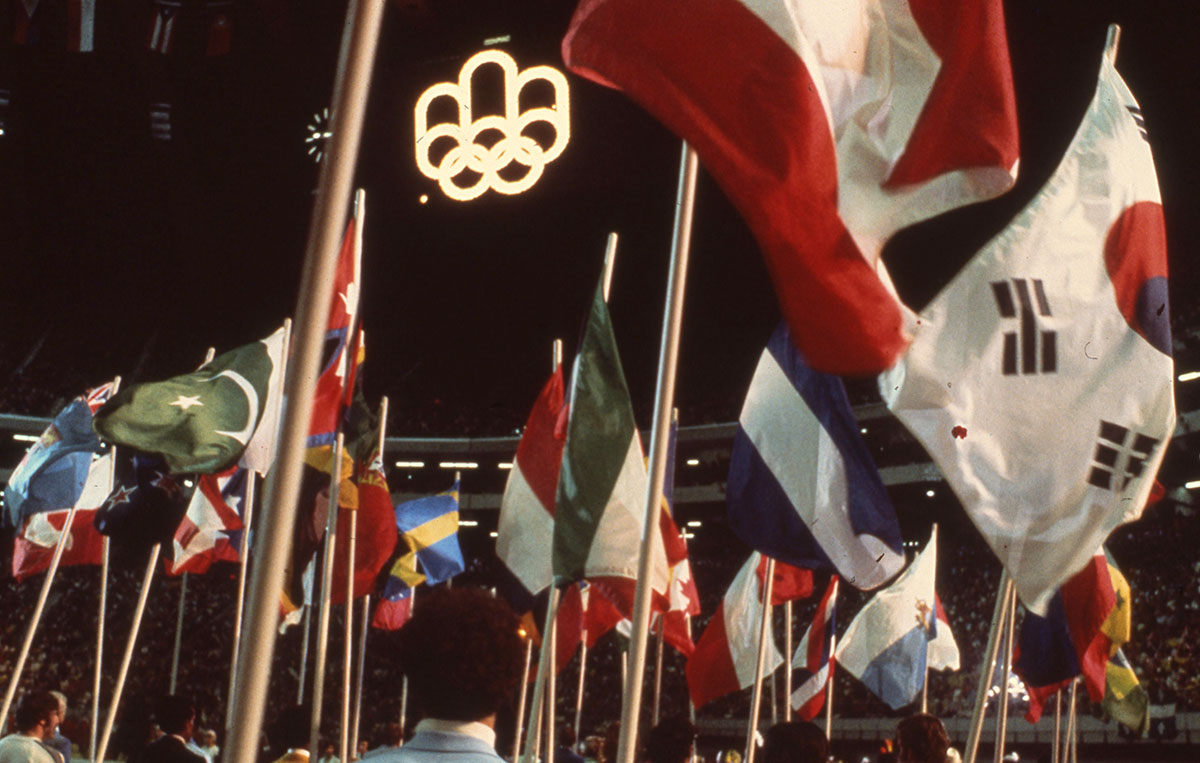
Fifty years later, the impact of Montréal 1976 continues to shape Québec’s sporting landscape. From the structuring of federations to the growth of development programs, the influence and impact of these Games can be felt at all levels.
In collaboration with Sports Québec.

The 1976 Games continue to shape Québec today
Far beyond a sporting event, the Montréal Olympic Games profoundly transformed the way Québec conceives, supports, and values sport, both at the amateur and elite levels.
Its influence can be seen today in the structure of sports federations, the emergence of development programs, Québec’s sporting identity, and the evolution of the Québec Games program.
Structuring the sports system
Hosting the Games led to unprecedented mobilization. To prepare Québec athletes, the government created Mission Québec 76, a financial and technical support program for Olympic hopefuls.
This initiative laid the foundations for a modern system for developing Québec’s elite athletes and accelerated the creation and consolidation of sports federations responsible for training, competitions, and coaching athletes, coaches, and officials.
Montréal 1976 marks a decisive step in the establishment of a coherent sports system that is better aligned with national and international standards.
A lasting legacy
The Games left behind a significant physical legacy. The Olympic Stadium, the Claude Robillard Center, Parc Jean-Drapeau, and several modernized temporary venues became key training and competition sites for thousands of athletes.
Certain disciplines, such as gymnastics, athletics, swimming, and combat sports, experienced considerable growth, stimulated by Olympic media coverage and the proliferation of local clubs inspired by the event.
Beyond infrastructure, Montréal 1976 contributed to the professionalization of the sports community, the training of coaches, officials, and managers, the implementation of Sport-Études programs, and, later, the creation of institutions such as the Institut national du sport du Québec (INS Québec).
A stronger grassroots base
The 1976 Olympic Games also promoted the democratization of sport in Québec. The Olympic momentum reinforced the development of youth initiatives, including the Québec Games program launched in 1971.
Many volunteers, officials, and organizers of the 1976 Games came from this network, and federations used the Québec Games as a platform for observation, recruitment, and selection for Mission Québec 76 and excellence programs.
The ceremonial model of the Québec Games (flame, oaths, protocol) and the competition format were directly inspired by the Olympic Games. The Québec Games Finals even served as “tests[MOU1] ” for the Montréal 1976 sports organization.
Created just five years before the Olympic Games, the Québec Games program benefited greatly from this momentum and became the driving force behind the structuring of provincial sports. Today, it continues to provide young people from all regions with their first multisport experience.
A springboard for identity and community
The 1976 Olympic Games reinforced Québecers’ sense of pride and collective identity around sport. Fifty years later, these Games remain a symbol of vision, ambition, and excellence in Québec sport.
This identity legacy is reflected in the symbolism and ceremony of the Québec Games, the visual language and protocol of major sporting events, Québec’s ability to host international events, and a sporting culture marked by solidarity, excellence, and boldness.