
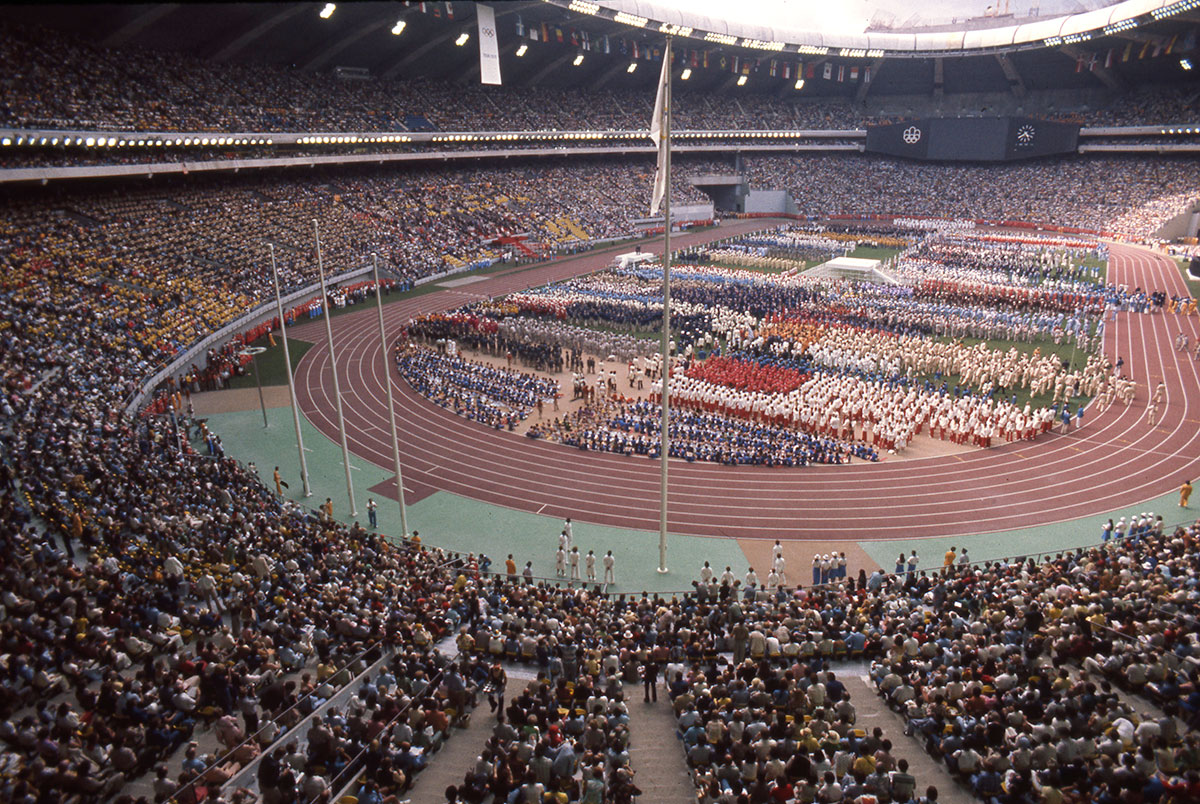
In July 1976, Montréal opened its doors to the world to host the 21st Summer Olympic Games. It was a memorable edition, marked by boldness, youthfulness, and achievements that continue to inspire today.
An extraordinary journey for a host city
In 1976, for the first and only time in its history, Canada hosted the Summer Olympic Games. Montréal, chosen in 1970 during the International Olympic Committee (IOC) session, embarked on a monumental construction project.
For 17 days, 6,084 athletes from 92 countries converged on Québec’s largest city to take part in a major sporting and human celebration.
The Montreal Olympic Games at a glance
| Opening | July 17, 1976 |
| Closing | August 1st 1976 |
| Participating nations | 92 |
| Events | 198 |
| Sports | 21 |
| Athletes | 6,084 (1,260 women and 4,824 men) |
| Canadian athletes | (including 99 Quebecers and 26 Montrealers) |
| Events venues | 24 |
| Spectators | 3,195,170 |
| Television viewers | 1.5 billion |
The 1976 Games logo
Entirely red, the emblem of the Montreal Olympic Games features the Olympic rings topped by a podium that also evokes the letter “M” for Montreal. At the centre is the athletics track, the focal venue of the Games. Designed by graphic designer Georges Huel, who also co-designed the torch with Michel Dallaire, the emblem symbolizes universal brotherhood, the glory of victory, the chivalrous spirit, and Montreal’s accession to the rank of an Olympic city.

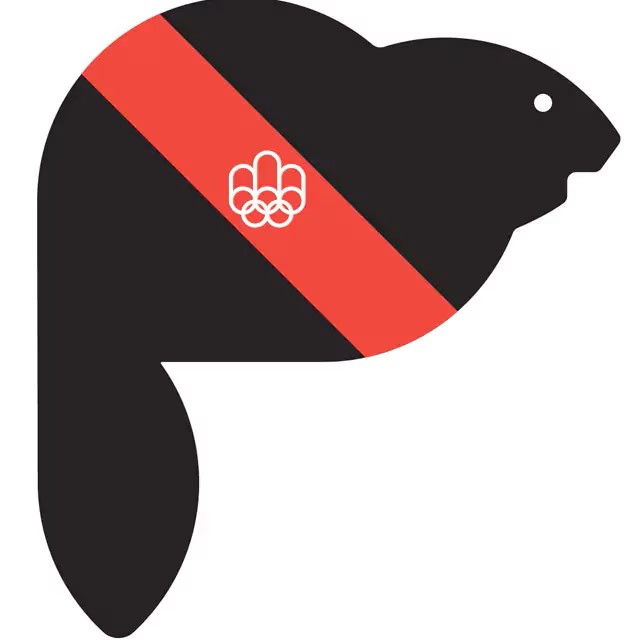
Amik, the mascot
Amik is the Algonquin word for beaver. This animal is known for its patience and tireless work ethic. The beaver holds an important place in the country’s history, particularly because of the fur trade, which played a major role in the economy during French colonization. A strong national symbol of Canada, it appears on certain coins and stamps. The mascot wears a red belt bearing the Games’ emblem, symbolizing the ribbon on which the winners’ medals are hung.
The torch
Designed by Michel Dallaire and Georges Huel, the Montreal Olympic torch is made of aluminum and weighs 836 grams. Its head was designed to provide the ventilation required for the combustion of olive oil, which fueled the flame. To create greater contrast with the fire and enhance the torch’s visual impact once lit, the head was painted black. Why olive oil? It gave the flame an orange hue that was more visible in daylight. The shaft was red, with the Games’ emblem painted in white. A total of 1,800 torches were produced.

The medals
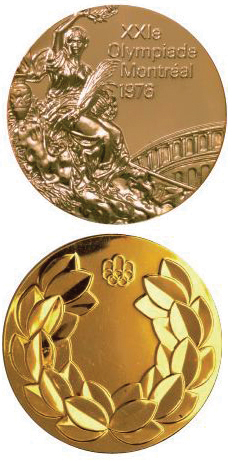
The design of medals for all Summer Olympic Games is standardized according to requirements set by the International Olympic Committee. As specified, the front features a design by Giuseppe Cassioli depicting Victory, Fraternity, and Universality. The Italian artist created this design for the 1928 Amsterdam Games. The back, whose design is left to the discretion of the organizing committee, is minimalist. It features a laurel wreath, a symbol of the ancient Games, along with the emblem of the Montreal Games.
The cauldrons
Serving as vessels for the Olympic flame, the cauldrons were designed with clean, modern lines. A total of six cauldrons were commissioned by the organizing committee. Four of them, made of stainless steel and measuring 60 cm in diameter, were installed in cities along the torch relay route. The other two, larger at 1.8 m in diameter and made of aluminum, remained lit for the entire duration of the Games—one at the foot of Mount Royal’s cross and the other inside the Olympic Stadium.

Opening ceremony
The opening ceremony, officially opened by Queen Elizabeth II, remains unforgettable. For the first time, a man and a woman lit the Olympic flame together. Fifteen-year-old Montrealer Stéphane Préfontaine and sixteen-year-old Ontarian Sandra Henderson ignited the cauldron at the Olympic Stadium before 73,000 spectators. This powerful gesture symbolized the unity, youth, inclusion, and modernity that Montreal sought to embody.
Closing ceremony
On August 1, before 73,000 spectators and half a billion television viewers, the flame is extinguished in the Olympic Stadium. After 16 days of competition, the Montreal Games come to an end. A total of 8,200 athletes take part in the parade. The Canadian flag bearer is Greg Joy, silver medallist in the high jump. During the ceremony, the Olympic flag that flew in the Stadium throughout the Games is presented to the Mayor of Moscow, host city of the 1980 Games. The closing show pays tribute to Indigenous traditions.